
By Eric Zhu V
When the whole COVID-19 ordeal started, I didn’t take it seriously, despite being Chinese-American and hearing about the crisis from my relatives in China early on. When the entire city of Wuhan was quarantined, I realized that the coronavirus wasn’t any simple flu variant.
But still, it seemed so far away, and I dismissed the idea of it spreading to the U.S. In French class, I joked with my classmates about our upcoming trip to Quebec. No one thought that the pandemic would have any effect on our trip. But soon, Mr. Brennan sent an email canceling all the school trips during March break. As if that wasn’t enough, even as I heard about the havoc that COVID-19 was wreaking in Italy and Iran, I refused to consider the U.S. as a possible victim. Well, I was wrong again.
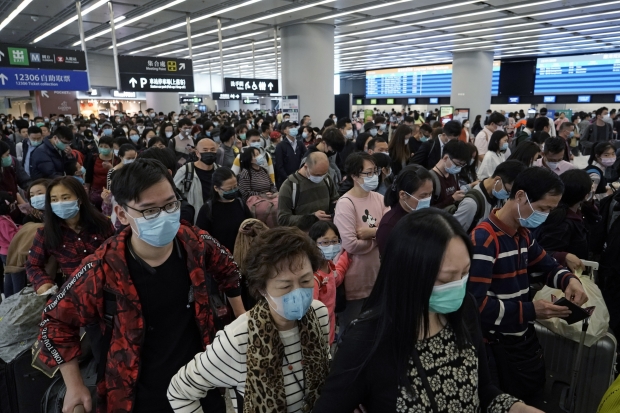
The respiratory illness has been rapidly spreading around the world and has infected almost 4 million people, resulting in over 250,000 deaths. What these statistics don’t capture are the rough realities of life under lockdown around the world. From the front line workers, such as doctors and kitchen workers, to the average citizen, we all play a role in containing the pandemic. What started as an ignored and relatively mysterious disease has erupted into a global pandemic that is causing mass havoc for everyone.
From the front line workers, such as doctors and kitchen workers, to the average citizen, we all play a role in containing the pandemic.
Things are rapidly changing for the human race. Everyone is feeling the stress that comes from having their normal lives disrupted by this pandemic. The necessity of social-distancing is keeping people in their homes, hoping for the lockdown to end. Taken-for-granted actions such as going to a grocery store and eating in a restaurant are not recommended and this absence has perturbed Americans. My relatives living in China have fortunately been able to avoid the pandemic. However, it has still caused stress for me and my family. I can recall multiple nights where we anxiously watched updates on COVID-19 at the dinner table. Nonetheless, we’ve been adapting to manage in these uneasy times. Instead of being physically present for activities, we have now centered on staying at home and communicating through virtual environments. However, adjusting isn’t easy for everyone. Some students don’t have basic technology to connect with peers and teachers, which highlights the potential “digital” divide that could result from virtual schooling.
Whether a cure is found for COVID-19 or if the pandemic naturally dies down, our lives will not revert to their former state in the blink of an eye. Maybe they won’t fully return at all. But one thing is certain: life afterwards will incorporate what we’ve learned through our fight with the coronavirus. For example, teachers and coaches may assign more innovative “homework” that centers around online submissions, such as videos of workouts for sports teams. A workout itself may take minutes, but the process of recording, sending, and everything in between teaches new skills to students. However, things don’t always change for the better. The digital aspect of education that we have adjusted with may create a more pronounced gap between developed and less developed countries. Furthermore, children from families who are less tech-savvy or well-off than others will fall behind in school. According to The Hill, officials in Washington, D.C. estimate that approximately 30 percent of students in the U.S. do not have access to the internet and devices that allow virtual education. As a result, some students have to cope by using the WiFi in parking lots to maintain their education. Providing funding for less well-off students should be a priority right now, for it’s not fair that they can’t continue the education that they previously were receiving. The situation that COVID-19 is creating will expose education inequality and bring it into the spotlight, leading to more action in the future.
The pandemic has upended the fabric of our society; the more careful we are about avoiding social contact, the quicker we will be able to end this war.
The fast-spreading COVID-19 pandemic has demonstrated the importance of adaptation, resilience, and community. Nonetheless, it’s been especially difficult for me since I am of Chinese descent and have relatives who are susceptible to the pandemic since they are so close to Wuhan. Life still goes on, and I’ve had the privilege of virtual RL through Zoom. The pandemic has upended the fabric of our society; the more careful we are about avoiding social contact and other factors that encourage the spread of the virus, the quicker we will be able to end this war. Above all, we need to stay optimistic: the changes that we undergo may pave a path for new innovations in education, communication, and other domains even after the virus is no longer so dangerous. Nonetheless, years from now, historians will look back and relive the havoc COVID-19 is bringing us through journal entries, photographs, and other means of remembrance; it’s not something that we’re going to forget anytime soon. We will feel its effects for the rest of our lives, and these reverberations may even spread across generations. But one thing we can be sure about: we’re going to emerge as changed people in a changed world. Like the crew of a storm-wracked boat, the people of the world will unite to steer humankind’s path towards calmer waters.
